
Supporting documentation for air traffic licensing applications
How to get copies of your documents certified.
All personnel licensing applications require supporting documents to be submitted as part of the application process. Where photocopies are being provided in lieu of original documents, some will need to be certified.
A certified copy is a copy of a document which is signed by an authorised person who has seen the original document and can vouch that the copy has been made accurately and honestly. Photocopies of documents that have been sent by email cannot be certified as true copies as the certifier has not compared it to the original document.
Certification requirements vary depending on the type of document that is being provided.
The CAA is rolling out a new digital service called the ‘Manage Personnel Licences’ service, which will make it easier for licence holders and their organisations to manage personnel licences. This service is being rolled out in phases, so some customers will continue to use the existing application process while others begin using the new system. During this transition period, the supporting document requirements may differ between the two processes. Both routes will operate in parallel until all customers have moved to the Manage Personnel Licences service.
You will need to provide a copy of your licence for certain Air Traffic licensing applications.
If you have had endorsements added onto your licence, you will need to provide a certified copy of your licence.
If your licence is as issued by the CAA (there are no handwritten additions to your licence) you can send us a photocopy of your licence without certification.
Who can certify your licence
Your licence can be certified by someone working in a 'recognised profession'.
Certification format
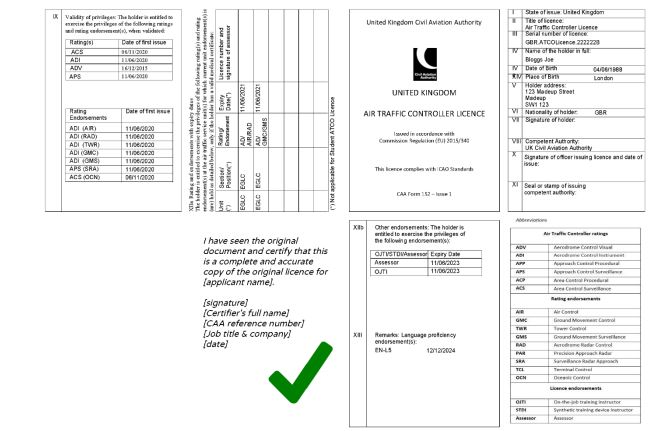
The certifier should write the following on each copy:
- the declaration “I have seen the original document and I certify that this is a complete and accurate copy of the original licence for (applicant name)”
- their signature
- their name (in block capitals)
- their position/job title and company (e.g., "Head of Training at [company name]")
- their CAA reference number (where applicable) or their professional qualification number
- the date
It does not matter where on the page the certifier enters the certification text, as long as all details on the licence can still be read.
Individuals using the Manage Personnel Licences service will be able to view their licensing records. To protect this data, users must complete an identity check with TrustID before they can sign in to the system.
Upon registering for access to the service, customers will be sent an email with a link to begin the verification process.
As part of the ID check, customers will need to upload a photo of one of the following accepted documents:
- Passport
- Driving licence (full or provisional)
- National photographic identity card
They will also be asked to take a selfie-style photograph for verification.
Once verified, customers won’t need to provide proof ID when submitting licensing applications through the online service, unless they want to change their legal name or nationality.
Read ID verification for detailed information on how to complete the process.
You will be asked to submit proof of ID with certain licensing applications.
For customers using PDF application forms, there are two ways to provide proof of ID:
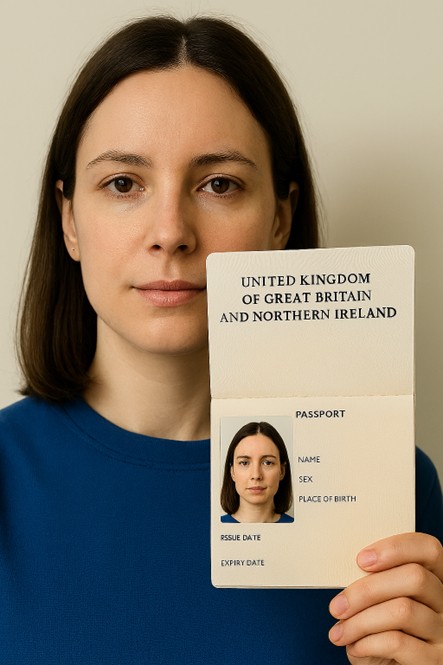
- by providing a photograph of you holding your photo ID
- by providing a certified copy of your photo ID
Providing a photograph of you holding your photo ID
The option to provide a photo of yourself holding your ID is provided as an alternative to obtaining a certified copy.
How to take the photo:
- take the photo in a room with enough light
- select the highest photo quality on the device you are using to take the photo
- hold up your ID document next to your face
- make sure both your head and shoulders are visible in the picture
- make sure your ID is clear in the photo. Nothing on the ID can be covered. The picture on your ID must be clear and all text must be legible
If your photo is not of high enough quality (sufficiently sharp and not blurry), we won’t be able to accept it and will therefore request a better or certified copy, which will delay your application.
We are unable to accept a photo where the passport image is reversed. Ensure your ID document is the right way around so it is readable, before submitting your photo.
Example
Providing a certified copy of your photo ID
Alternatively, you can provide a photocopy of your photo ID that has been certified by someone working in a 'recognised profession'.
Certification format
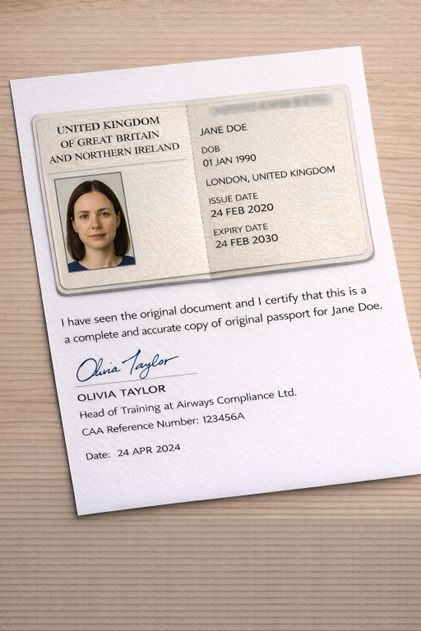
The certifier should write the following on each copy:
- the declaration “I have seen the original document and I certify that this is a complete and accurate copy of the original passport for (applicant name)”
- their signature
- their name (in block capitals)
- their position/job title (for example, "Head of Training at [company name]")
- their CAA reference number (where applicable) or their professional qualification number
- the date
It does not matter where on the page the certifier enters the certification text, as long as they don’t write over the photo or passport details.
Example
If you need to change the name on your licence, we may ask for a certified copy of your marriage certificate or deed poll certificate to be submitted with your change of details application.
Who can certify your marriage certificate or a deed poll
Your certificate can be certified by someone working in a 'recognised profession'.
Certification format
The certifier should write the following on each copy:
- the declaration “I have seen the original document and I certify that this is a complete and accurate copy of the original [marriage certificate] for [applicant name]”
- their signature
- their name (in block capitals)
- their position/job title and company(for example, "Head of Training at [Company name]")
- their CAA reference number (where applicable) or their professional qualification number
- the date
In order to certify a document for a licensing application, the certifier must meet the following criteria:
The certifier must:
- be 18 or over
- work in (or be retired from) a ‘recognised profession’
The certifier cannot be someone:
- you’re related to by birth or marriage
- you’re in a relationship with or live with
The following are considered to be a ‘recognised profession’.
Aviation Professionals: for Air Traffic Controllers:
- Manager of Air Traffic Services
- Deputy Manager of Air Traffic Services
For Student Air Traffic Controllers (at initial training organisation):
- Assessor
- Verifier
- Course Manager
For Flight Information Services Officers:
- CAA Authorised Examination Invigilator
- Manager of Flight Information Service
- Deputy Manager of Flight Information Service
For Radio Operators:
- UK CAA Authorised ROCC Examiner
Other Aviation professionals:
- Airline Pilot - must hold a UK issued pilots’ licence
- Base Captain
- Chief Flying Instructor (CFI)
- Engineer - must hold a UK issued engineers’ licence
- Fleet Manager
- Head of Flight standards at an Air Operator Certificate holder or authorised signatory
- Head of Training at your Approved Training Organisation
- UK-approved examiner
Non-aviation professionals:
- Accountant
- bank or building society official
- Barrister/Solicitor
- commissioner for oaths
- Councillor, for example local or county
- civil servant (permanent)
- Dentist
- Doctor
- financial services intermediary, for example a Stockbroker or Insurance Broker
- fire service official
- justice of the peace
- local government officer
- Member of Parliament
- Minister of a recognised religion (including Christian Science)
- Nurse (RGN or RMN)
- Officer of the Armed Services
- Optician
- paralegal (certified paralegal, qualified paralegal or associate member of the Institute of Paralegals)
- Pharmacist
- Police Officer
- Post Office official
- Warrant Officers and Chief Petty Officers