

As an International Civil Aviation Organisation (ICAO) Member State, the UK has agreed to collaborate with other Member States to improve the level of environmental protection across a number of areas, including aircraft noise. The main overarching ICAO policy on aircraft noise is the Balanced Approach to Aircraft Noise Management (ICAO Doc 9829) which was adopted by the ICAO Assembly in its 33rd session in 2001. The Balanced Approach consists of various measures to reduce noise which can be classified into the following four key principles:
Reduction of Noise at Source
Reduction of noise at source refers to aircraft noise which has been controlled since the 1970s through the introduction of noise limits for aircraft certification, as set out in Volume I of Annex 16 to the Convention on International Civil Aviation. The primary purpose of noise certification is to ensure that the latest noise reduction technology is included in aircraft design, ensuring that noise reductions offered by technology reflect a reduction in noise impacts around airports. The noise limits outlined in Volume I of Annex 16 are referred to as ‘chapters’ and the way in which aircraft are certified varies depending on aircraft type. The Committee on Aviation Environmental Protection (CAEP) assists the ICAO Council in formulating the noise standards for aircraft certification.
Noise certification standards for jet and large propeller aeroplanes are defined by three reference noise measurement points - approach, sideline and flyover, and are set as a direct function of maximum take-off mass in recognition that heavier aircraft produce more noise. Since 1972, four aeroplane noise standards have been developed for this category of aircraft. The progression in noise performance as a result of the different noise standards is illustrated on ICAOs website, alongside the effect of the noise standards on the landing and take-off noise footprints of a typical 75 tonne twin-engine jet aeroplane.
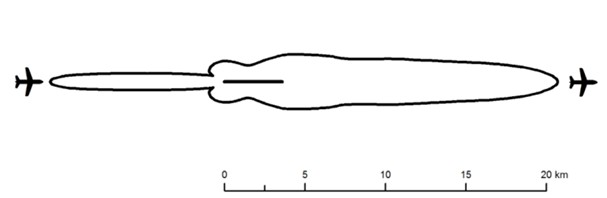
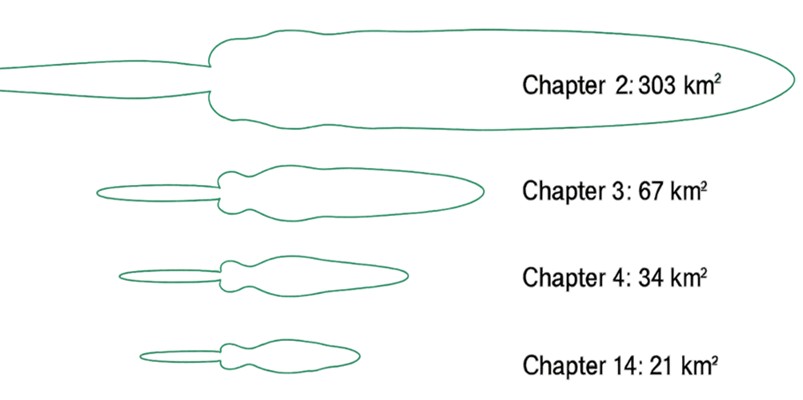
Further information regarding EPNdB (also referred to as EPNL) and SEL are outlined in the CAA’s Noise Metrics Guidance.
Noise standards have also been developed for light propeller aeroplanes, helicopters and tiltrotors. Standards for supersonic aeroplanes were developed for Concorde and work is ongoing in ICAO to develop new noise standards for future supersonic aeroplanes. ICAO is also considering the development of noise standards for emerging technology aircraft.
Land-Use Planning and Management
Effective land-use planning and management around airports can help minimise the number of people affected by aviation noise. It also ensures that reductions in noise achieved by the latest generation aircraft are not offset by increased residential development around airports. ICAO guidance on land-use planning and management is contained in Volume I Part IV of Annex 16 to the Convention on International Civil Aviation and in ICAO Doc 9184.
Noise charges are also a possible noise management tool in the ICAO Balanced Approach. ICAO first developed policy regarding this in 1981. The ICAO Council recognise that, although noise reductions are being achieved in aircraft noise at source, some airports need to apply noise alleviation or preventative measures either due to the volume of air traffic at an airport, or due to the number of people affected in the vicinity of an airport. If noise-related charges are levied, ICAO recommends that this should only be done at airports experiencing issues with noise pollution and that the charges should be designed to recover no more than the alleviation or prevention of noise impacts, which should be non-discriminatory between users and not be established at levels prohibitively high for the operation of certain aircraft. ICAO Doc 9082 outlines ICAO’s policies on charges for airports and air navigation service providers; ICAO Doc 9562 provides advice on determining the cost basis for noise-related charges and their collection; and information on noise-related charges actually levied is provided in the web based platform ICAO Aero Tariffs.
Noise Abatement Operational Procedures
The way in which aircraft operate in the vicinity of an airport may also influence the noise impacts experienced by those on the ground. These impacts can be improved by implementing low-noise operational procedures that are safe and cost-effective. ICAO assists on the development and standardisation of low-noise operational procedures, such as noise preferential routes and noise abatement procedures. The appropriateness of these measures is bespoke to each airport as it depends on its physical layout and surroundings. In addition, each ICAO State has its own process for changing the notified design of airspace. For example, in the UK, CAP1616 outlines guidance on the regulatory process for changing the notified design of airspace. ICAO’s recommendations on operational procedures are contained in the following documents:
- ICAO Doc 8168 Procedures for Air Navigation Services - Aircraft Operations (PANS-OPS) Part I Flight Procedures: This document provides guidance on noise preferential runways and routes, displaced thresholds, approach and landing operating procedures and Noise Abatement Departure Procedures.
- ICAO Doc 8168 Procedures for Air Navigation Services - Aircraft Operations (PANS-OPS) Part II – Construction of Visual and Instrument Flight Procedures: This document includes the consideration of noise aspects on the planning and definition of departure routes, including the compromise involved in concentrating or spreading aircraft noise.
- ICAO Doc 9931 - Continuous Descent Operations (CDO) Manual and ICAO Doc 9993 - Continuous Climb Operations (CCO) Manual: These documents provide guidance on arrival and departure operations that may present benefits for both noise and emissions.
- ICAO Doc 9888 - Noise Abatement Procedures: Review of Research, Development and Implementation Projects – Discussion of Survey Results: This document provides a summary of research conducted in 2006 and 2008 regarding noise abatement procedures.
- ICAO Doc 10031 - Guidance on Environmental Assessment of Proposed Air Traffic Management Operational Changes: This document provides environmental assessment guidance to support decision making when analysing proposed air traffic management operational changes.
- ICAO Doc 10177 - Manual on Operational Opportunities to Reduce Aircraft Noise: This manual identifies and reviews various operational opportunities and techniques for minimising noise in civil aviation operations. It is intended to be used in conjunction with the Guidance on the Balanced Approach to Aircraft Noise Management (Doc 9829).
Operating Restrictions
Operating restrictions on Chapter 3 aircraft should be explored after all other available elements of the Balanced Approach have been exhausted. Chapter 7 of ICAO Doc 9829 outlines examples of operating restrictions. These include:
- curfews;
- night-time restrictions;
- noise quotas / budgets; and
- restrictions relating to the nature of flight.
In addition to those mentioned above, some operating restrictions have led to the phase-out of certain aircraft, such as Non-Noise Certified aircraft in the 1980s and Chapter 2 aircraft in the 1990s. Operating restrictions of this kind can have significant economic implications for some airlines and countries, particularly for those that are developing. The ICAO Assembly in 2001 urged states not to introduce any operating restrictions at any airport for Chapter 3 aircraft before fully assessing other available measures to address airport noise in accordance with the Balanced Approach. Safeguards were also listed by the Assembly which would need to be met if restrictions were imposed on Chapter 3 aircraft. For example, restrictions should be based on the noise performance of the aircraft as determined by the certification procedure conducted consistent with ICAO Annex 16, Volume I, and tailored to the noise problem of the airport in question, in addition to the individual circumstances of operators from developing nations being taken into account. These policies were adopted as ICAO Assembly Resolutions.
The aim of the Balanced Approach is to address noise issues at the individual airport level, in addition to identifying noise-related measures that achieve maximum environmental benefits most cost-effectively using objective and measurable criteria. ICAO identifies that “the process for implementation and decisions between elements of the Balanced Approach is for Contracting States and it is ultimately the responsibility of individual States to develop appropriate solutions to the noise problems at their airports, with due regard to ICAO rules and policies.”